










































How to Read an Online Opal Listing Like a Specialist

1. Confirm whether the image shows the exact item
The first question is not “Is the photograph good?” It is “Is this the exact product I will receive?”
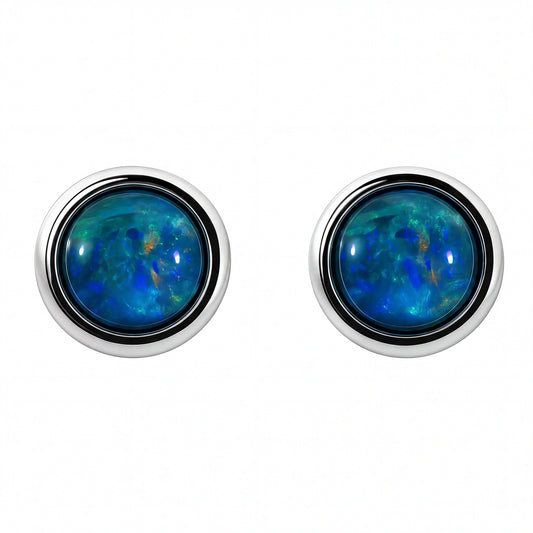
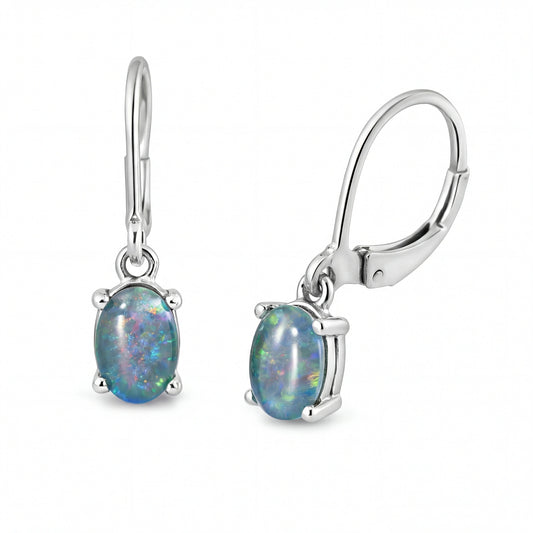
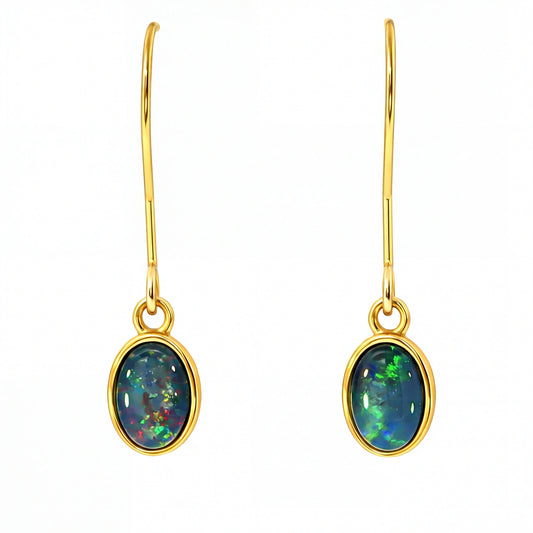
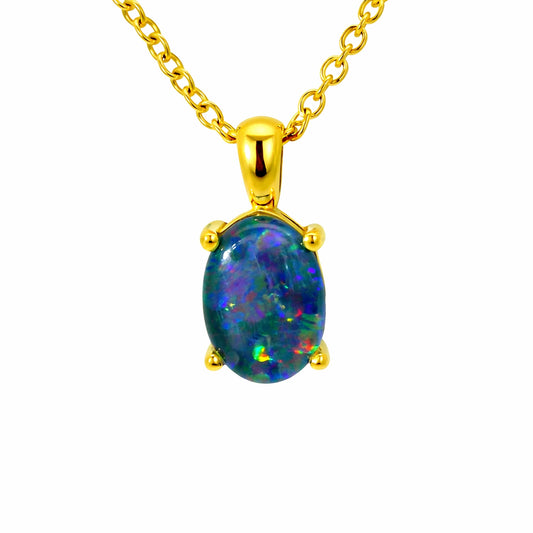
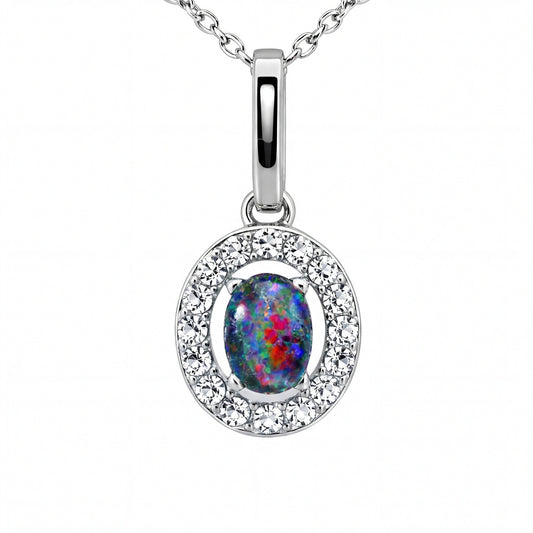
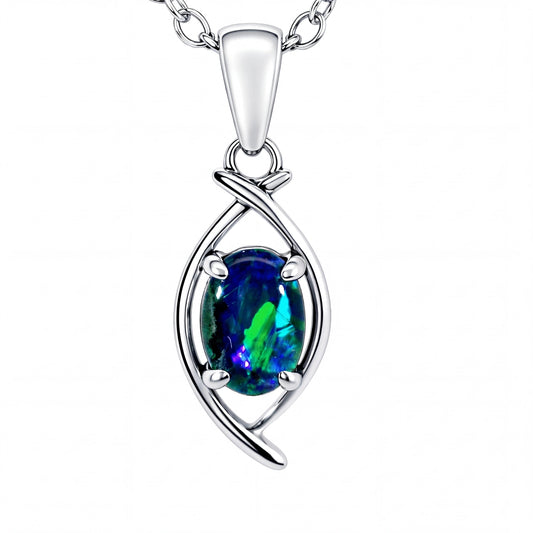
For one-of-a-kind natural black, boulder, dark, light or crystal opal, the listing should make product identity clear. If photographs are representative, that should be stated before purchase.
Representative imagery can be legitimate for repeat-design jewellery, particularly where natural opal layers create minor variation. The listing should still explain which characteristics may vary and which specifications will remain constant.
Good disclosure: “The photographs show the exact one-of-a-kind opal.” Or: “Images are representative; natural pattern and colour placement vary between pieces.”
2. Identify the construction
The listing should state whether the opal is:
-
solid natural opal;
-
boulder opal cut with its natural host rock;
-
a doublet, with a natural opal layer attached to a backing;
-
a triplet, with a natural opal layer, backing and clear protective cap;
-
treated opal;
-
laboratory-grown or synthetic; or
-
an imitation material.


These categories are not interchangeable. An assembled opal may be attractive and appropriate at its price point, but it should not be presented as a solid opal.
The Opal Association’s nomenclature guidance recommends disclosure of natural opal type, variety, body tone, transparency, weight and dimensions, with treatment or composite construction identified where relevant.
3. Separate body tone from play-of-colour
“Black opal” does not simply mean an opal displaying black, blue or dark colour. In industry nomenclature, black opal refers to precious opal with a dark body tone, commonly N1 to N4 on the body-tone scale.
Body tone is the background against which play-of-colour appears. Play-of-colour is the spectral colour that changes as the stone or light moves.
A useful listing should not rely on vague phrases such as “dark and mysterious”. It should state the opal variety and, for a higher-value piece, ideally provide a recognised body-tone description.
4. Look for dimensions—not only carat weight
Carat weight tells you mass. It does not tell you how the stone will appear on a hand, neckline or ear.
Look for:
-
length and width;
-
depth or profile where relevant;
-
total jewellery dimensions;
-
ring face dimensions;
-
chain length;
-
earring drop; and
-
an image showing scale on a body or beside a familiar reference.
Opal has lower density than many gemstones, so a visually large stone may not have the carat weight a diamond buyer expects. Dimensions make comparison more practical.
5. Read the colour description with discipline
A listing should describe what is visible without promising that every viewer, screen and lighting condition will reproduce it identically.
Useful language might identify:
-
dominant and secondary colours;
-
whether play-of-colour is broad, pinfire, rolling or patch-like;
-
how much of the face displays colour;
-
whether the colour is directional or visible from many angles; and
-
whether the stone is transparent, translucent or opaque.
Be cautious with absolute claims such as “shows every colour in all light” unless the evidence supports them. Opal can change markedly between daylight, diffuse indoor light and direct spot lighting.
6. Inspect the cut and condition
GIA’s opal evaluation framework includes symmetry, thickness, polish, sizing and calibration. Exceptional opals may be cut freeform to preserve colour, so a non-standard outline is not automatically a defect.
The listing should disclose material condition issues that affect beauty or wear, including:
-
visible fractures or crazing;
-
pits or significant surface features;
-
matrix or host rock where it is not an intended part of the variety;
-
chips; and
-
previous repair or alteration where known.
Natural inclusions and host material can be desirable in some boulder opals. The important issue is accurate description, not artificial perfection.
7. Read the jewellery specification separately from the gemstone story
A poetic description of the opal should not replace basic jewellery data.
Confirm:
-
metal type and fineness;
-
whether plating is used;
-
ring size or sizing range;
-
setting type;
-
chain inclusion and metal;
-
other gemstones and whether they are natural or laboratory-grown;
-
total dimensions; and
-
the exact product SKU.
For a ring or frequently worn piece, inspect photographs from the side and back. A listing that only shows the front prevents you from judging profile and construction.


8. Check treatment, origin and manufacturing claims
Country-of-origin and quality claims should be accurate and supportable. “Australian opal” concerns the gemstone’s origin. “Made in Australia” concerns where and how the finished product was manufactured. Those are different claims.
Ask for clarity when a listing uses expressions such as:
-
Australian opal;
-
Australian made;
-
hand cut in Sydney;
-
direct from miners;
-
untreated; or
-
certified.
A certificate should be described accurately. GIA, for example, evaluates opal but does not issue a universal opal “grade”. Identification, valuation and authenticity documents serve different purposes.
9. Read customer-care terms before checkout
The listing should lead clearly to current delivery, return, warranty and care information. These terms should be understandable before payment, not revealed afterwards.
Australian Consumer Law rights are automatic and separate from any voluntary warranty. A seller’s change-of-mind policy is different from remedies for a faulty, incorrect or materially misdescribed product.
For Australian Opal Cutters, the approved editorial position is that eligible direct retail purchases may qualify for a 30-day change-of-mind return subject to the policy’s conditions and exclusions. Eligible jewellery is also supported by Australian Consumer Law rights, an additional two-year manufacturer’s warranty and a separate Lifetime Care & Service Program. The live policy pages must be corrected before this article links to them.
10. Use a five-minute listing scorecard
|
Question |
Strong listing |
Weak listing |
|---|---|---|
|
Product identity |
Exact item or representative-image status clearly stated |
Unclear whether the pictured stone is supplied |
|
Construction |
Solid, boulder, doublet or triplet disclosed |
Only says “opal” |
|
Specification |
Dimensions, metal, setting, SKU and relevant weight |
Mostly adjectives |
|
Imagery |
Multiple angles, scale and honest lighting |
One highly saturated hero image |
|
Customer care |
Current delivery, returns, warranty and contact information |
Policies hidden or contradictory |
Frequently asked questions
Can photographs ever show an opal perfectly?
No photograph can reproduce every angle and lighting condition, but multiple accurate images and video can give a fair representation.
Are doublets and triplets fake?
No. They contain natural precious opal and can be legitimate products when construction is disclosed. They should not be represented as solid opal.
What matters more: carat weight or dimensions?
Both can matter, but dimensions are often more useful for understanding visual scale and wearability.
Should an opal come with a certificate?
Documentation can be valuable, particularly for significant purchases, but identify whether it is an identification report, valuation, authenticity statement or seller certificate.
How can I ask about a listing?
Use the SKU and ask one precise question at a time: exact-item status, construction, dimensions, direction, treatment, metal or customer-care terms.
Clarity is part of the product
A fine opal does not need an exaggerated story. Its individuality is already compelling.
At Australian Opal Cutters, the strongest online experience should allow a customer to move from the opal collection to a clear question through direct contact, and from online interest to an in-person showroom comparison where needed.
When a listing is specific, consistent and visually honest, confidence begins before the parcel is opened.