







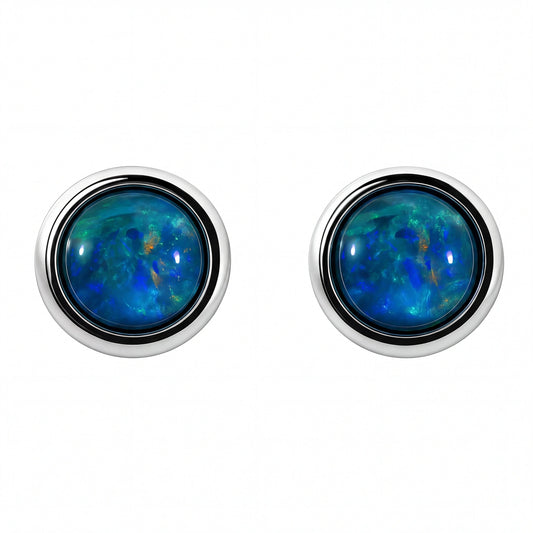

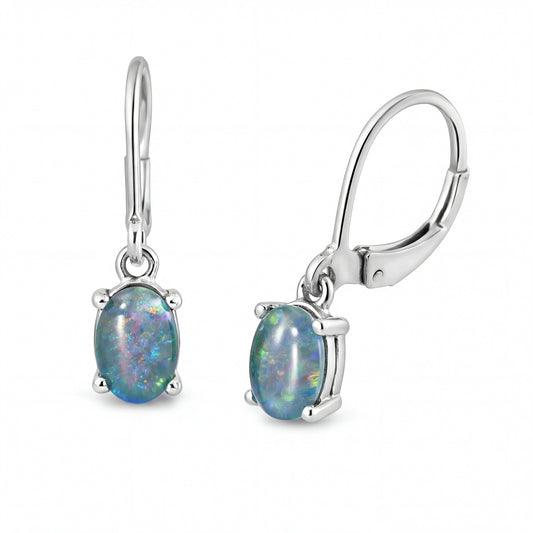

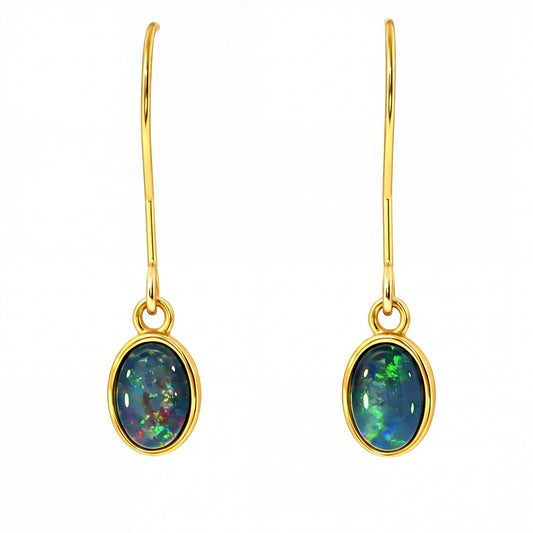

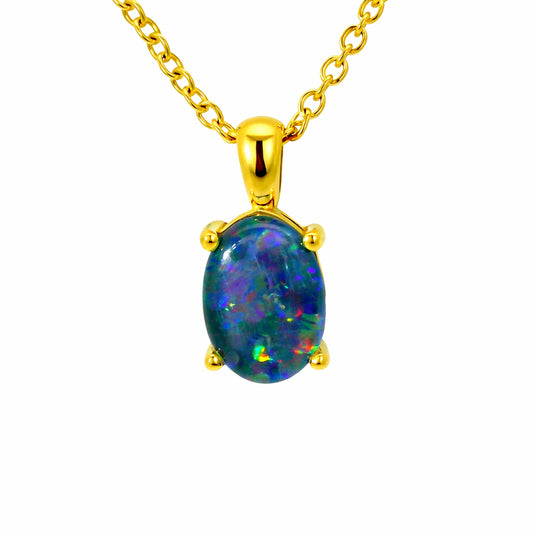

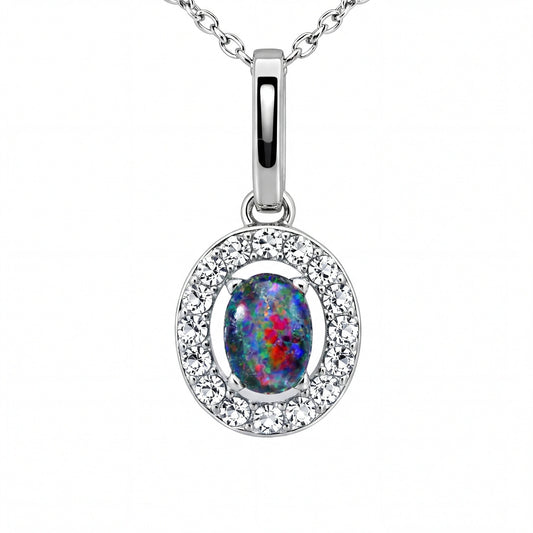

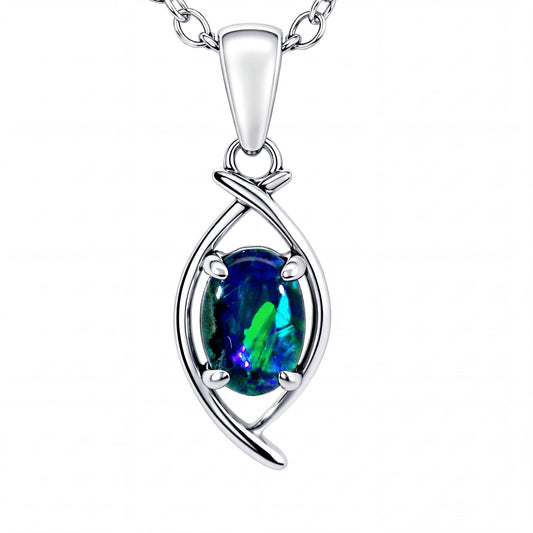

Loose Opal or Finished Jewellery? Choosing the Right Starting Point
Some buyers fall in love with a finished ring or pendant. Others fall in love with a stone and want the jewellery to follow.
Neither approach is inherently better. The right starting point depends on how much design control you want, how soon the piece is needed, whether the opal must fit a particular body or lifestyle, and how comfortable you are making decisions before seeing the final object.
This guide compares loose opal and finished jewellery as two different buying journeys.
 Start with a loose opal when the stone is the non-negotiable part
A loose stone is the stronger starting point when a particular opal has captured your attention and you are willing to design around its individual shape, colour and direction.
This path suits buyers who:
-
want a one-of-a-kind centre stone;
-
care strongly about exact colour and pattern;
-
need a specific jewellery format or scale;
-
want to choose metal and setting architecture;
-
are comfortable approving a design before manufacture; or
-
are building a collector piece rather than buying for immediate wear.
Fine opal is often cut to preserve colour rather than fit a standard shape. Starting with the loose stone allows the design to respect that outline rather than forcing it into a generic mounting.
Start with finished jewellery when wearability is the non-negotiable part
A finished piece lets you judge the complete experience immediately: scale, balance, metal colour, weight, comfort and how the opal sits on the body.
This path suits buyers who:
-
need a gift by a defined date;
-
prefer to see the complete object before committing;
-
are new to opal and want fewer design decisions;
-
have found a setting that already suits the stone;
-
want clearer immediate pricing; or
-
prefer an eligible ready-made purchase over custom work that may be excluded from change-of-mind returns.
Ready-made does not mean generic. When the jewellery has been designed around an individual opal, it can be every bit as distinctive as a commissioned piece.

Compare the two journeys
|
Question |
Loose opal first |
Finished jewellery first |
|---|---|---|
|
What do I see before purchase? |
The exact stone; the final setting remains to be designed |
The complete object, scale and wearability |
|
Design control |
High |
Limited to available piece or later alteration |
|
Timing |
Requires design and manufacture time |
Potentially available immediately |
|
Cost certainty |
Stone price plus a separate design/manufacture quote |
Complete price usually known at purchase |
|
Change-of-mind flexibility |
Custom or altered work may be excluded |
Eligible ready-made retail purchases may qualify under the current policy |
|
Best for |
Stone-led, bespoke and collector decisions |
Immediate wear, gifting and complete-object confidence |
How to choose a loose opal for jewellery
A beautiful loose stone is not automatically suitable for every jewellery format.
Consider direction
A strongly directional opal may suit a pendant if its strongest face aligns with the natural hanging position. A ring moves through more angles and may benefit from a broader display.
Consider profile
A high dome can create presence but may require a taller setting. A flatter stone may be easier to keep low but can have different setting considerations. The cutter and jeweller should assess the exact stone.
Consider outline
Freeform shapes can preserve exceptional colour and create sculptural jewellery. They also require a setting made precisely to the stone.
Consider condition
Any fractures, crazing, chips or stability concerns should be identified before metal is designed around the opal.
How to evaluate finished opal jewellery
Do not stop at the face of the stone.
-
View the piece from the side and back.
-
Check how high the opal sits.
-
Ask how the setting protects exposed edges.
-
Confirm metal type and fineness.
-
Check chain, clasp, earring fitting or ring size.
-
Ask whether resizing or alteration is possible.
-
Understand how alteration affects returns, warranty and service.
A setting should feel like part of the opal’s logic, not an unrelated frame selected because it happened to fit.

The cost question
With a loose stone, separate the decision into at least two numbers:
-
the opal; and
-
the setting, design, metal, other gemstones and labour.
Ask for a written scope before manufacture. A custom quote may change if dimensions, metal, setting complexity or supporting gemstones change.
With finished jewellery, confirm whether the listed price includes the chain, certificate, sizing or other accessories. Never assume.
The returns and warranty question
The distinction between ready-made and custom work matters.
Australian Opal Cutters’ updated returns policy provides a 30-day change-of-mind period for eligible direct retail purchases, subject to product condition and exclusions. Custom-made, specially ordered, engraved, resized, altered, recut or otherwise personalised products may be excluded from change-of-mind returns.
This is separate from Australian Consumer Law rights concerning faulty, unsafe, incorrectly supplied or materially misdescribed goods.
For eligible jewellery, the approved warranty structure is Australian Consumer Law rights, an additional two-year manufacturer’s warranty and a separate Lifetime Care & Service Program. Do not treat the service program as an unlimited lifetime warranty against all wear or accidental damage.
A hybrid approach: compare both before deciding
You do not need to choose the pathway before entering the showroom.
A useful comparison may include:
-
one finished piece that closely matches your needs;
-
one loose stone with stronger colour but no setting yet; and
-
one alternative stone that allows a different budget or design direction.
This reveals whether your attachment is primarily to a stone, a design or the complete convenience of a ready-made piece.

Questions for a bespoke discussion
- Will the design be built around the exact stone?
- How will the strongest colour direction be oriented?
- Which edges need protection?
- What is the expected finished size and profile?
- Which design approvals will I receive?
- What is included in the quotation?
- What changes require a revised quote?
- What is the expected production period?
- What customer-care terms apply to custom work?
Frequently asked questions
Is a loose opal cheaper?
Not necessarily. It separates the stone price from the setting cost. The final total depends on opal quality, metal, design complexity and other materials.
Can any loose opal become a ring?
No. Profile, condition, dimensions, direction and lifestyle suitability should be assessed before choosing the format.
Is ready-made jewellery less unique?
No. A ready-made piece designed around an individual opal can be entirely one of a kind.
Can I return custom jewellery?
Custom and altered products may be excluded from change-of-mind returns. Australian Consumer Law rights for faulty or misdescribed goods remain separate.
Can I bring my own opal?
Ask the jeweller to assess it first. Condition, dimensions and setting risk must be understood before a design is accepted.
Choose the right first certainty
If the stone is the certainty, start loose and let the design follow. If the complete object is the certainty, start with finished jewellery.
Australian Opal Cutters can help you compare current loose black opals, finished opal jewellery and the custom-design pathway in one Sydney appointment. The strongest decision is the one that makes the next stage clear.