







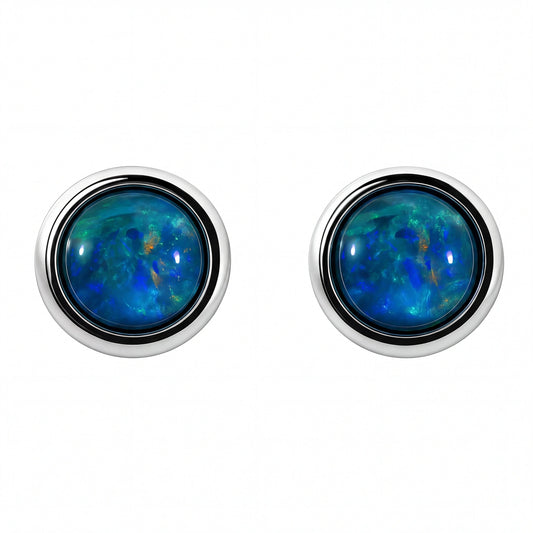

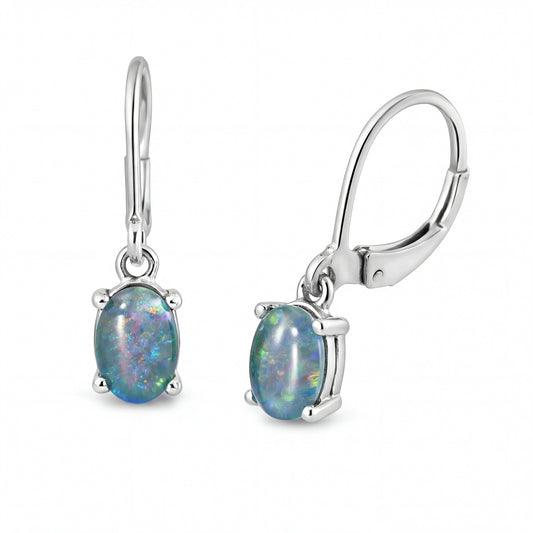

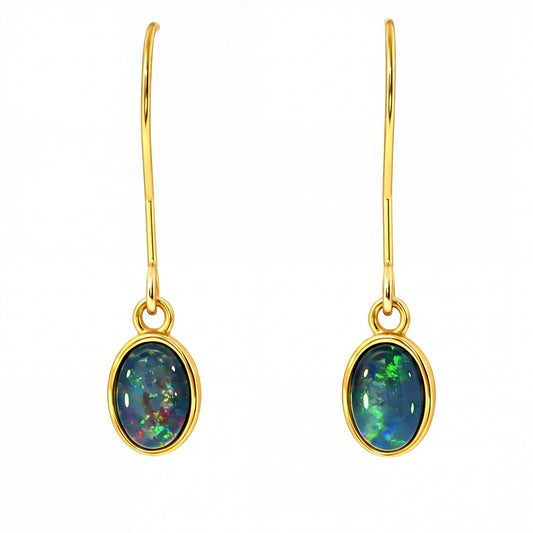

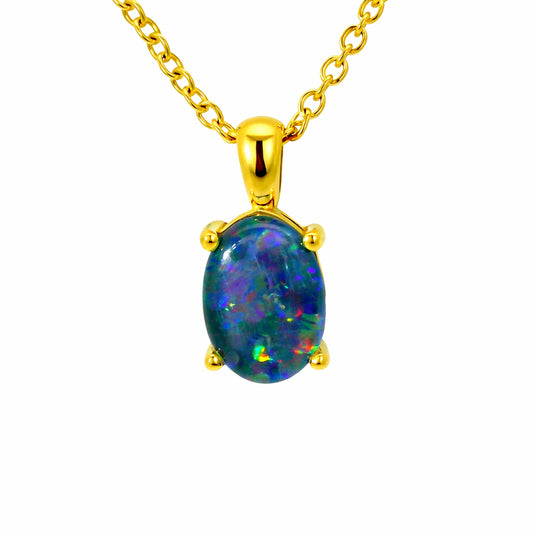

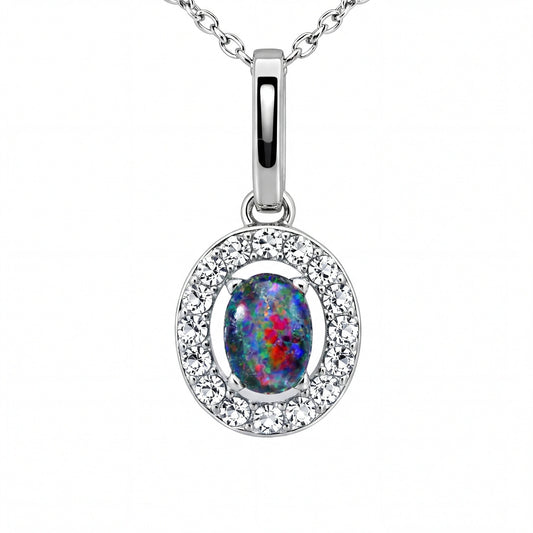

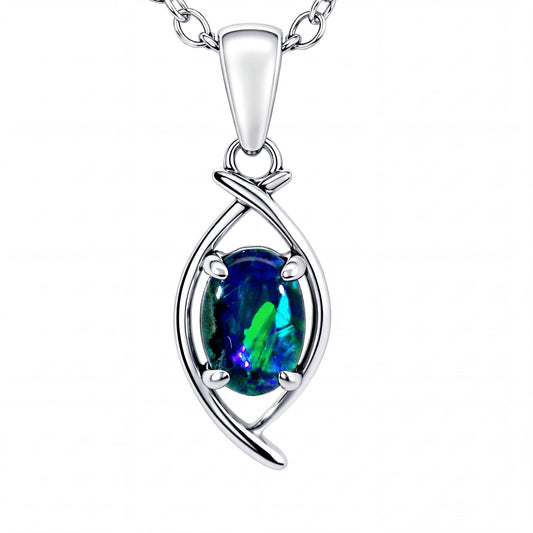

What Makes Fine Opal Valuable Beyond Carat Weight
A large opal can be ordinary. A much smaller opal can be extraordinary.
This surprises buyers trained to begin gemstone comparisons with carat weight. Opal value is not governed by a universal price-per-carat chart. Weight matters, but only after the stone’s type, colour, brightness, pattern, transparency, direction, cut and condition have been understood.
The useful question is not “How many carats?” It is “What visual and material qualities do those carats contain?”
Carat weight measures mass—not beauty
Carat weight records how much the stone weighs. It does not tell you:
-
how much of the face displays play-of-colour;
-
whether the colour is bright or weak;
-
whether the strongest display is broad-angle or narrowly directional;
-
whether the pattern is coherent;
-
whether the cut preserves exceptional material; or
-
whether cracks or instability affect the stone.
Opal also has relatively low density compared with many gemstones, so visually large pieces may weigh less than a buyer expects.
1. Opal type creates the first context
Before comparing quality, identify what is being valued:
-
solid black, dark, light or crystal opal;
-
boulder opal with natural host rock;
-
doublet or triplet;
-
treated opal;
-
laboratory-grown opal; or
-
finished jewellery rather than a loose stone.
A doublet and a solid black opal can create a similar face-up colour impression while representing very different material structures and price contexts. Neither should be judged without disclosure.
2. Body tone changes contrast
Body tone is the background of the opal, considered separately from its play-of-colour. A dark body tone can create strong contrast, which is why fine black opal attracts considerable attention.
Darker is not automatically better. A very dark stone with faint colour can be less compelling than a slightly lighter stone with exceptional brightness and pattern.

3. Brightness is one of the strongest visual factors
Brightness is the intensity of the play-of-colour. GIA notes that vivid play-of-colour is prized over faint display.
Assess brightness under consistent conditions. Ask:
-
Is colour visible without a pinpoint spotlight?
-
Does it remain lively as the stone moves?
-
Are the strongest colours confined to a tiny area?
-
Does the colour appear clear or muted?
Brightness should be judged together with body tone and distribution.
4. Colour range matters—but preference remains personal
Opal may display one dominant hue or a broad spectrum. Traditionally, red and orange play-of-colour can be highly prized, but a weak red flash does not automatically outrank a brilliant blue-green display.
Consider:
-
dominant hue;
-
secondary hues;
-
range across the spectrum;
-
brightness of each colour;
-
coverage across the face; and
-
your own long-term response.

5. Pattern is arrangement, not just a name
Pattern describes how play-of-colour is arranged. Trade terms include pinfire, mosaic, harlequin, flame and rolling flash. Some terms are used too freely.
A valuable pattern should be evaluated for:
-
scale of the colour patches;
-
regularity or coherence;
-
brightness;
-
coverage;
-
absence or presence of inactive areas; and
-
whether the named pattern is genuinely supported.
The name is not the value. The visible structure is.

6. Direction changes how the opal performs
An opal that displays strong colour across many angles can be easier to appreciate in jewellery and is often highly desirable. A directional stone may be magnificent from its intended face but quieter outside that position.
Direction should be considered in relation to use. A pendant can hold a repeatable orientation; a ring moves constantly.

7. Transparency can enhance or weaken the effect
Crystal opal is transparent to semi-transparent precious opal. Transparency can create depth and luminous colour, but the background and setting may influence the appearance strongly.
Clarity is not judged exactly as it is in diamond. Matrix, potch, pits, inclusions and transparency affect different opal varieties in different ways.

8. Cut is an act of interpretation
GIA explains that fine opal may be cut in large or irregular shapes to preserve exceptional play-of-colour. Standard symmetry still matters, but it is not the only objective.
Evaluate:
-
face-up composition;
-
dome and profile;
-
thickness;
-
polish;
-
edge condition;
-
orientation of the strongest colour; and
-
whether unnecessary weight has been retained beneath the face.
9. Condition can override visual excitement
Fractures, crazing, chips or instability can materially affect durability and value. A bright stone with serious condition problems requires a different decision from a sound stone with comparable visual quality.
Ask for condition to be assessed openly, especially before custom setting.
10. Jewellery craftsmanship adds a separate layer of value
A finished opal jewel contains both gemstone value and workmanship. Consider:
-
metal and fineness;
-
design originality;
-
setting security;
-
finish;
-
proportion;
-
supporting gemstones; and
-
whether the design responds to the opal.
The setting should not be used to disguise weak material, but excellent craftsmanship can elevate the experience of an exceptional stone.

|
Factor |
Question |
Common mistake |
|---|---|---|
|
Type |
What material and construction am I comparing? |
Comparing solid and assembled opal as though identical |
|
Brightness |
How intense is the colour in fair light? |
Judging only under a spotlight |
|
Pattern |
How is colour arranged and distributed? |
Paying for a pattern name without verifying it |
|
Direction |
How wide is the useful viewing angle? |
Ignoring how the piece will move when worn |
|
Cut |
Does the cut maximise the best material? |
Assuming perfect oval means superior |
|
Condition |
Is the stone sound and openly described? |
Letting brightness distract from fractures |
What a valuation can and cannot tell you
A valuation is a professional assessment for a stated purpose and date. It may help with insurance, documentation or understanding the characteristics of a piece.
It is not:
-
a guaranteed resale price;
-
a promise of future appreciation;
-
an investment return;
-
an automatic buy-back offer; or
-
a substitute for accurate product identity and condition disclosure.
Any claim that opal will rise by a fixed annual percentage should be treated cautiously.
Frequently asked questions
Is a bigger opal always more valuable?
No. Size and weight matter only in combination with type, brightness, colour, pattern, direction, cut and condition.
Is red the most valuable colour?
Red can be highly prized, but brightness, coverage, pattern and overall quality matter. Personal preference also remains important.
Does a named pattern guarantee value?
No. The pattern must be genuine, bright, well distributed and considered alongside every other factor.
Why are some fine opals freeform?
A cutter may preserve an irregular outline to retain exceptional colour, thickness or pattern that would be lost in a standard shape.
Does a valuation guarantee what I can resell the opal for?
No. A valuation is not a guaranteed resale price or purchase offer.
Compare what the eye can actually see
A fine opal earns attention through a combination of qualities, not one number.
At the Australian Opal Cutters Sydney showroom, ask to compare pieces with similar dimensions but different brightness, pattern or direction. That exercise teaches more about value than memorising a hierarchy of carat weights.