







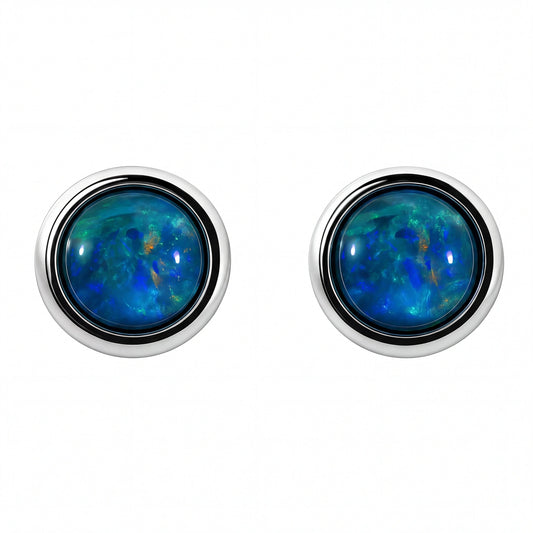

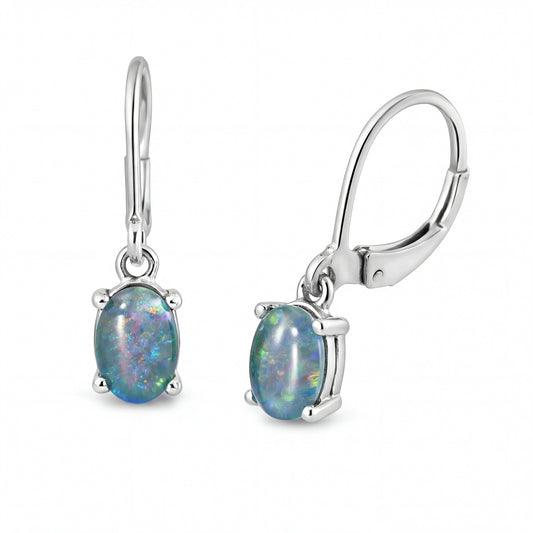

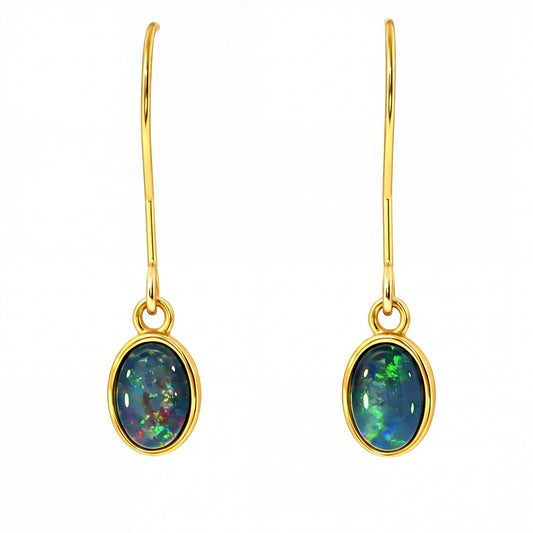

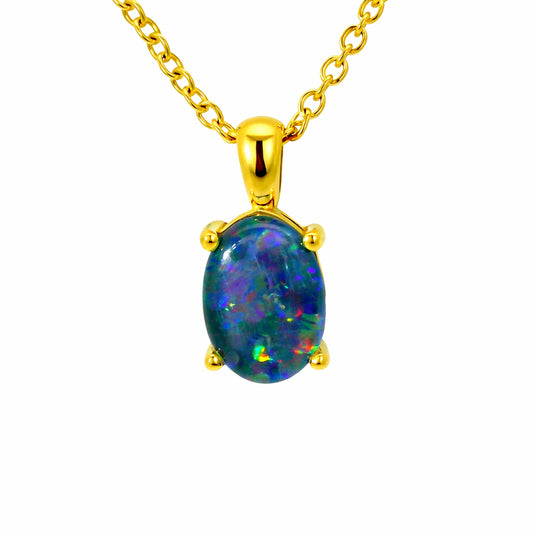

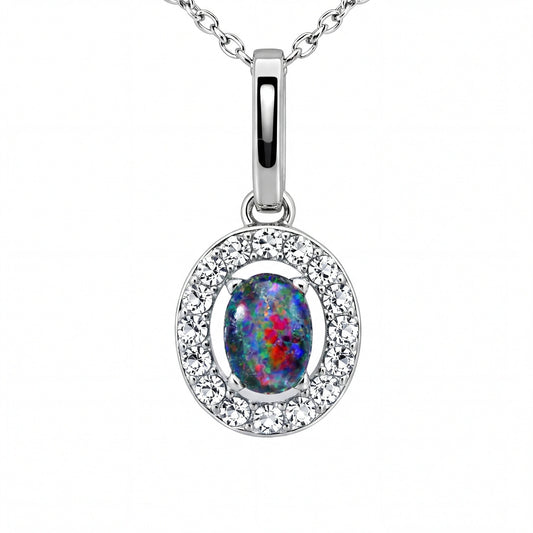

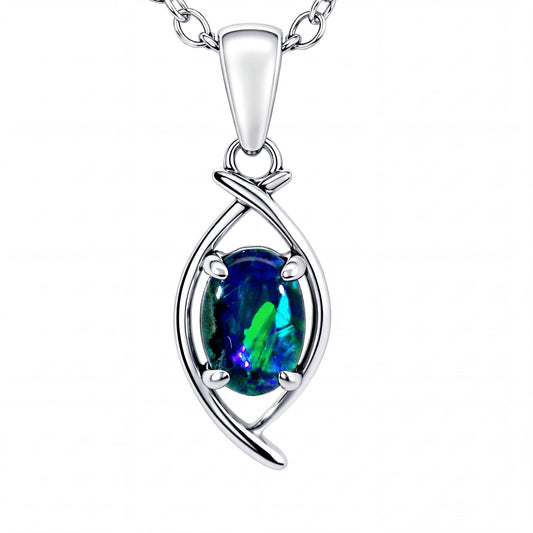

Why Your Opal Looks Different in Every Photograph
Photograph the same opal beside a window, under a jewellery spotlight and beneath an overcast sky, and you may appear to have photographed three different stones.
That does not automatically mean the camera is lying. Opal is an optical gemstone: its play-of-colour changes as the angle between light, stone and viewer changes. The camera adds another layer through exposure, white balance, focus, lens choice, processing and the screen on which the image is viewed.
The challenge for an ethical online seller is not to make an opal look identical in every image. That is impossible. The challenge is to represent the individual stone fairly enough that the buyer understands both its beauty and its variability.
Opal colour is produced by interaction with light
Precious opal contains an ordered arrangement of microscopic silica spheres and tiny voids. Light interacting with this structure is separated into spectral colour. As the angle changes, the visible colour can change too.
This is why play-of-colour may:
-
appear stronger from one direction;
-
shift from blue-green to orange-red as the stone tilts;
-
look broader in moving video than in a still image;
-
seem more intense against a dark background; or
-
become quieter under diffuse light.
The photograph captures one set of relationships at one moment. The opal itself contains a larger visual experience.
Five reasons the photograph changes
1. The direction of light
Direct light can produce sharp, intense flashes. Diffuse light softens reflections and may reveal a more representative everyday appearance. Backlighting may expose transparency but suppress the face-up display.
2. The viewing angle
A camera positioned a few degrees higher or lower can record a different section of play-of-colour. This is especially important for directional stones.
3. Exposure and white balance
Automatic cameras try to make a scene look “correct”. A dark-bodied opal on a white background may cause the camera to brighten or darken the image unexpectedly. White balance can shift colour warmer or cooler.
4. Reflections from the environment
A polished cabochon reflects windows, lights, clothing, the camera and the photographer. Some apparent colour or dark areas may be reflections rather than features inside the stone.
5. The viewer’s screen
Phones, tablets and monitors differ in brightness, colour profile and display settings. Even an accurately prepared image cannot control how every screen reproduces it.
Why black opal is particularly demanding
Black opal relies on contrast between a dark body tone and play-of-colour. A camera can easily overexpose the colour while lifting the dark background, or crush the background so deeply that surface detail disappears.
A responsible photograph should not turn a dark opal into an impossibly luminous object. It should show:
-
the body tone;
-
the strongest colour;
-
the quieter angles;
-
the scale and cut; and
-
the condition of the surface and edges.
For higher-value black opal jewellery, moving video is particularly useful because it shows how the display builds and falls away.
What an honest opal image set should contain
A neutral face-on image
This should show the stone in its intended viewing orientation without an extreme tilt designed only to capture the brightest flash.
Two or more angled images
These reveal direction and pattern change. The angles should be meaningfully different, not duplicates.
A short movement video
Slow, controlled movement is more informative than fast shaking under a pinpoint light. The buyer needs to see the width of the useful colour display.
A scale image
Dimensions should be stated, but a photograph on the hand, ear or neckline helps translate millimetres into experience. The model image should not replace the exact product image.
Side and back views
These help buyers assess dome, depth, setting profile, construction and condition. For a doublet or triplet, side views can also support transparent disclosure.
A consistent background
A controlled background makes comparison between products easier. A dark background can help evaluate some opals, but the seller should avoid using background tricks that imply an unrealistic body tone.
Editing that helps—and editing that misleads
Technical editing is often necessary. Sensible adjustments can correct:
-
dust on the background;
-
cropping and rotation;
-
slight exposure errors;
-
white balance;
-
lens distortion; and
-
file size and sharpness for web display.
Editing becomes misleading when it materially changes the stone:
-
inventing colour patches;
-
increasing saturation beyond the real display;
-
removing fractures, chips or inclusions;
-
altering body tone;
-
changing shape or proportion;
-
compositing the product onto a model at the wrong scale; or
-
using an AI-generated “similar” opal in place of the exact item.
An opal is not a generic blue gemstone. Its internal colour map is its identity.
How buyers should interpret variation
Natural variation should be explained carefully. For one-of-a-kind opals, the supplied item should be the actual stone shown. For repeat-design doublet or triplet jewellery, representative photographs may be used if the page discloses that fact and explains which natural details may vary.
Minor differences caused by angle, lighting, cameras and screens are normal. Supplying the wrong SKU, metal, size, design or a materially different item is not simply “natural variation”.
A practical photo test before buying
- Confirm whether images show the exact item.
- Compare face-on and angled views.
- Watch the video at normal speed.
- Check dimensions and scale.
- Look for side and back views.
- Ask whether colour has been materially enhanced.
- Request one additional neutral-light video if the purchase is significant.
How Australian Opal Cutters should photograph one-of-a-kind pieces
Every individual opal listing should connect the product, SKU and image set. The strongest standard would include controlled photography of the exact stone, a slow rotation, physical dimensions and a clear statement of whether the image is exact or representative.
Customers who want to resolve the final uncertainty can visit the Sydney showroom or contact the team for a targeted video of a particular stone.
Frequently asked questions
Does a different-looking photograph mean the opal is fake?
No. Genuine opal can change dramatically with lighting and angle. Identity, construction and treatment must be assessed separately.
Should opal be photographed in sunlight?
Sunlight can be one useful condition, but it should not be the only one. Direct sun may exaggerate flashes that are less prominent indoors.
Why does my phone make blue look stronger?
Automatic exposure, white balance, processing and screen display can all alter the apparent balance of colour.
Is video more accurate than photography?
Video reveals movement and direction, but it can still be affected by lighting, processing and fast motion. Use both.
Can AI be used to improve product images?
AI may assist with background cleanup or technical workflow, but it should never fabricate or materially alter the actual opal, jewellery design, condition or scale.
The goal is not sameness—it is honesty
A good product image does not freeze opal into one definitive appearance. It gives the buyer a fair map of how the stone behaves.
When the exact product, multiple angles, dimensions and moving colour all agree, photography becomes part of the evidence rather than merely part of the advertising.