











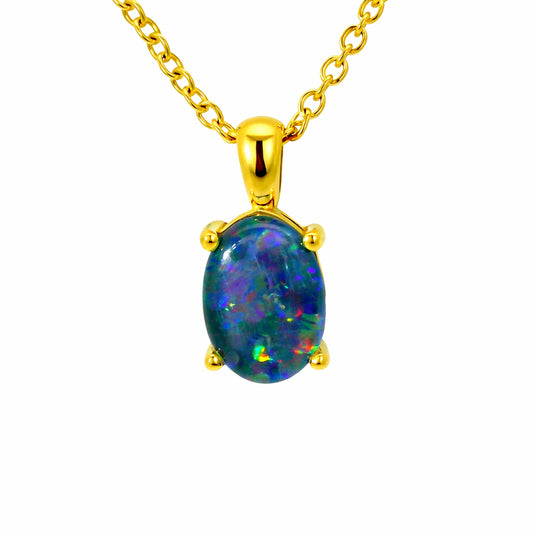

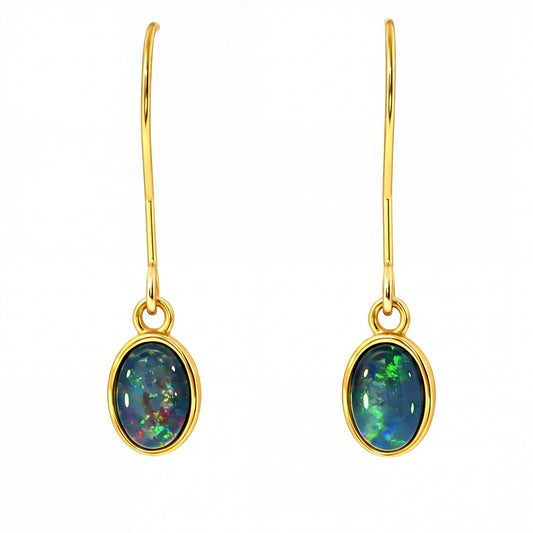

The Setting Is the Frame: Designing Jewellery Around an Opal
An opal already contains the picture.
Its colour moves, disappears and returns. Its pattern may be quiet, architectural, cloud-like or explosive. The jeweller’s role is therefore different from decorating a blank centre stone. The setting must frame an artwork that changes every time the wearer moves.
A successful custom design begins by asking what the opal needs—not what can be added around it.

Begin with the stone’s visual centre
Before sketching metal, identify what makes the opal compelling.
-
Is the strongest feature a broad field of colour?
-
Does the pattern pull the eye diagonally?
-
Is one edge especially active?
-
Does the ironstone in boulder opal create a landscape?
-
Is the stone transparent and luminous?
-
Does the outline already feel sculptural?
The setting should support that visual centre. A symmetrical halo around an opal with strong directional movement may fight the stone. A clean bezel may allow the movement to remain dominant.
Frame, do not compete
Fine jewellery can be elaborate, but elaboration should have a purpose.
Ask of every added element:
-
Does it improve proportion?
-
Does it protect the opal?
-
Does it strengthen the colour?
-
Does it connect the piece to the wearer?
-
Does it solve a structural problem?
-
Would the design be stronger without it?
Luxury often appears as confidence to remove the unnecessary.

Metal colour changes the reading of opal
Yellow gold
Yellow gold can echo warm flashes and create rich contrast with blue and green. It can also make an earthy boulder opal feel connected to the ironstone.
White gold or platinum
Cool-toned metal can create a clean frame and may support blue, green and violet without adding another strong hue.
Rose gold
Rose gold can bring warmth and softness, but should be tested against the exact opal. It can harmonise with pink and red or compete with delicate colour.
There is no universal best metal. Place the actual stone beside metal samples and view the combination under more than one light.

The outline should inform the architecture
Standard settings begin with standard dimensions. Custom opal design begins with the exact outline.
A freeform opal may suggest:
-
a close bezel that follows the contour;
-
an asymmetrical pendant with balanced suspension;
-
a ring whose shoulders respond to the wider side of the stone;
-
a brooch that treats the opal as part of a larger sculptural composition; or
-
negative space that repeats an internal movement.
The design should look inevitable around that stone, not like a generic setting adjusted at the last minute.
Protection can be elegant
Opal has a Mohs hardness commonly reported around 5 to 6.5 and can be scratched or chipped. Protection should be integrated into the design rather than added as visual armour.
Possible strategies include:
-
a low profile;
-
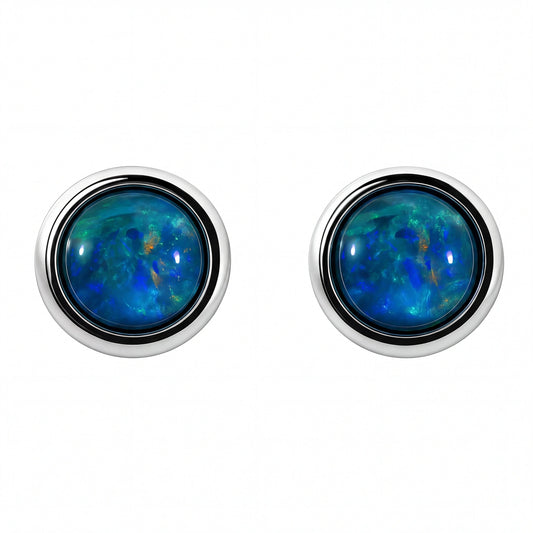
a bezel or partial bezel;
-
metal positioned near vulnerable edges;
-
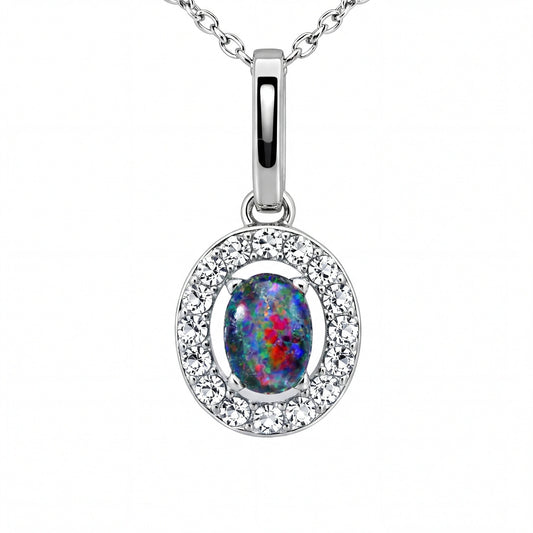
a halo that creates a buffer;
-
a pendant format for a particularly delicate stone; and
-
avoiding exposed sharp points.
This article concerns the whole design language, not only engagement rings. A pendant, brooch or earring may offer greater freedom for a large or irregular opal than a ring intended for constant wear.
Use supporting gemstones with restraint
Diamonds, sapphires and other stones can create contrast, rhythm or transition. They can also turn a complex opal into visual noise.
Before adding a halo or pavé, test:
-
whether the supporting stones brighten the opal or overpower it;
-
whether scale is appropriate;
-
whether the colour relationship is intentional;
-
whether the added settings create maintenance concerns; and
-
whether the design still has a clear focal point.
Sometimes one small diamond provides more focus than twenty.
Consider the body, not only the drawing
Jewellery is completed by wear.
A pendant design must account for:
-
chain length;
-
bail position;
-
how the stone hangs;
-
rotation; and
-
the neckline.
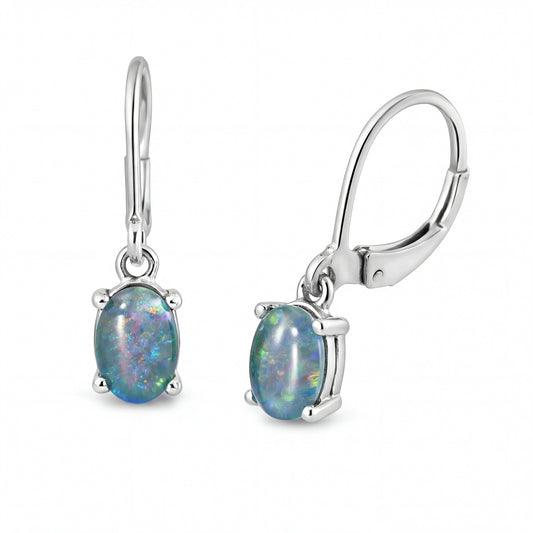
A ring must account for finger size, hand movement, profile and a future wedding band where relevant. Earrings must account for weight, balance, hair and movement.
A beautiful top-view sketch can still fail if the side view and body relationship are unresolved.
Design from all three views
Before manufacture, review:
Front view
Focal point, proportion, colour relationship and outline.
Side view
Height, stone support, bail or gallery, claw length and how the piece meets the body.
Back view
Access for cleaning, structural support, finish and any openings or engraving.
For a one-of-a-kind opal, these views should be tied to the exact dimensions of the stone.

The bespoke process should create checkpoints
A responsible custom process is collaborative but controlled.
-
Select and document the exact opal.
-
Define the use, budget, metal and design objective.
-
Develop sketches or CAD around actual dimensions.
-
Review front, side and back.
-
Confirm quotation and what changes may alter it.
-
Manufacture and prepare the setting.
-
Set the stone with appropriate care.
-
Inspect, finish and document the completed piece.
Alterations made after approval can affect cost, timing and change-of-mind eligibility. These terms should be clear before work begins.
Three design directions from one opal
Quiet frame
A close bezel, simple bail or clean band lets the opal carry the visual story.
Architectural frame
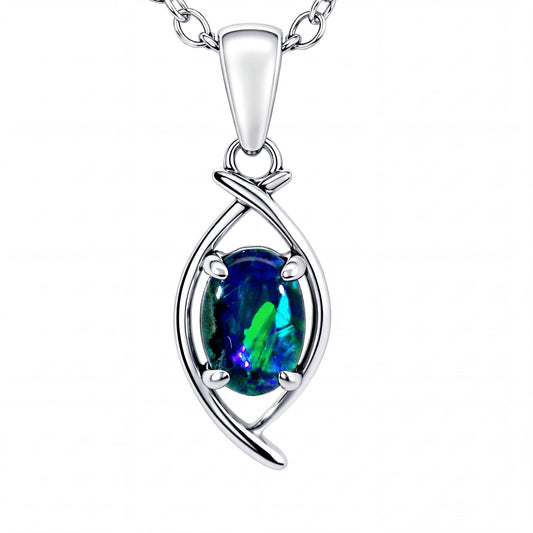
Structured metal, negative space or asymmetrical support responds to the opal’s internal geometry.
Ornamental frame
Diamonds, engraving or decorative metal create ceremony and richness while preserving a clear centre.
None is inherently superior. The test is whether the setting feels specific to the stone and wearer.

Frequently asked questions
Should the setting match every colour in the opal?
No. Trying to repeat every hue can create clutter. Choose a metal and supporting palette that allow the opal to remain dominant.
Is a bezel always the best setting?
No. It can provide protection and a clean frame, but the exact stone, design and use determine the best approach.
Can a freeform opal look refined?
Yes. A precise setting and balanced composition can make an irregular outline feel more sophisticated than a forced standard shape.
Should custom jewellery use CAD?
CAD can clarify dimensions and views, but it is a tool rather than a substitute for material judgement and hand finishing.
Can I redesign an inherited opal?
Often, but the stone and existing setting should be assessed before any irreversible work.

Let the opal lead
The setting is not background in the sense of being unimportant. A frame can change how an artwork is seen. Its success lies in directing attention without demanding it.
Australian Opal Cutters’ custom opal jewellery process can begin with a current loose stone, an existing opal or a design brief. The strongest commissions make the final metalwork feel like the only convincing home for that particular opal.
